
Q&A with Forrest Schultz
I sat down with the President of Atlas Lens Co. to discuss the nuts and bolts of what makes a movie truly feel cinematic.

What do Project Hail Mary, The Batman, and Everything Everywhere All at Once have in common? All three blockbuster films utilized anamorphic lenses created by Atlas Lens Co. to create a stylized and memorable visual image for the screen. But what is an anamorphic lens anyway? And why does it matter? I spoke with Atlas Co-Founder, President, and lead designer Forrest Schultz about what goes into designing movie camera lenses, working with his cinematographer heroes, and what it was like designing custom IMAX lenses for the upcoming Dune: Part Three. (Plus, we talk about the death mask of Joseph Smith.) It’s a fascinating read – check it out below!
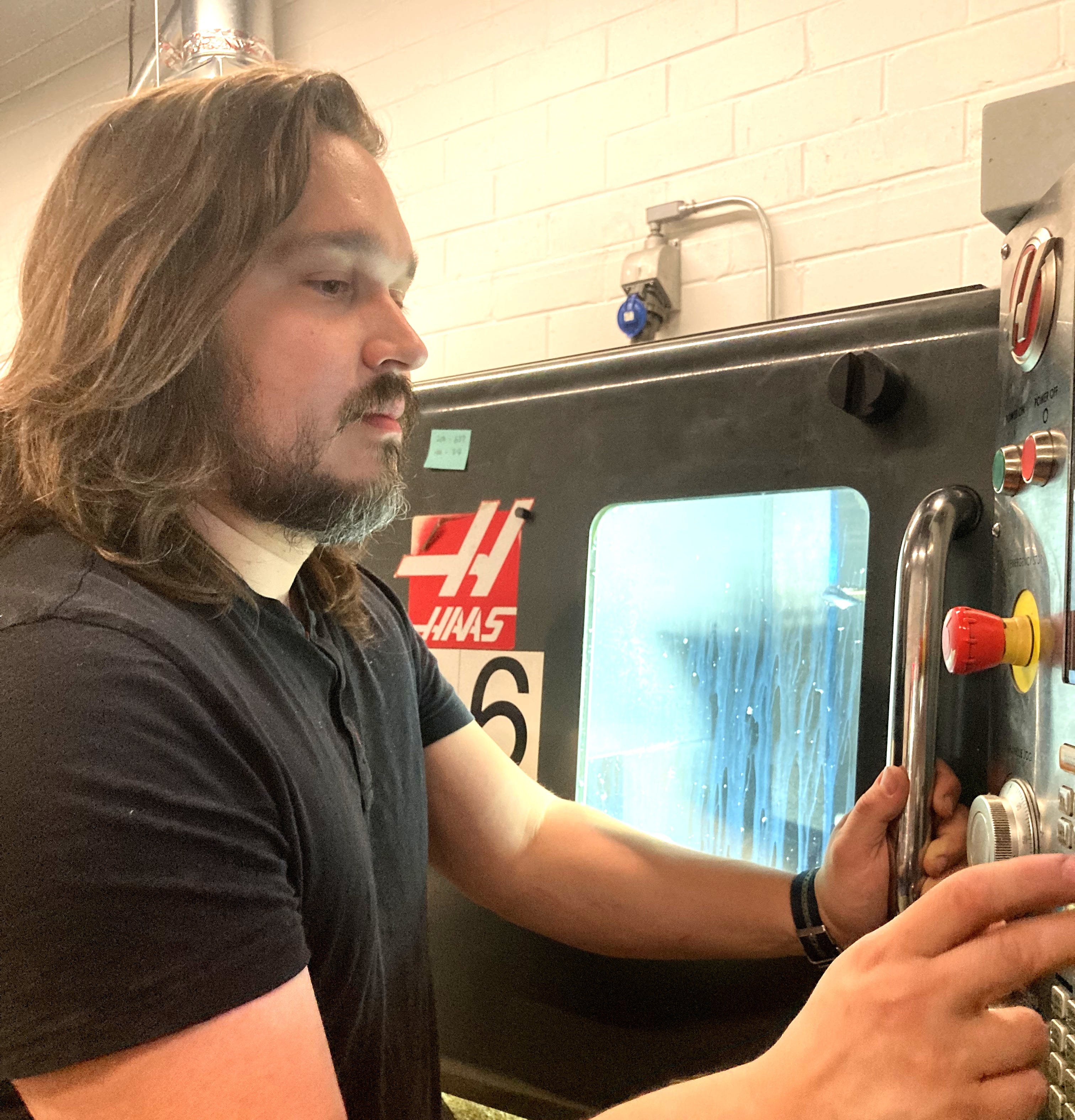
Your journey into the film industry isn’t the typical story. Tell me a bit about your background and what led you to starting Atlas Lens Company.
I’ve always wanted to build things. My mom did crafts, my dad was a carpenter. I remember as a kid him teaching me how to hammer correctly. So I think it’s my nature, I was always excited by what things I could make with tools. My mom bought a video camera for home movies, and at age 11 I started recreating my favorite film scenes from Gladiator and The Matrix. By the time I was 16 or 17, I started asking, “What makes the difference between an amateur movie versus a Hollywood film?” There were these huge leaps being made in the technology, but even then there was such a huge difference between the technology you could own versus what was in theaters. And so I was experimenting with cameras and lenses and looks that I could achieve to get a little closer to what looked like a full feature film – for example, making a thing called a depth of field adapter, a way of projecting a lens that was meant to cover a larger sensor onto a piece of ground glass, and then using your camera to basically reimage that image on a floating piece of glass. And that looked cool because it gave you depth of field, and that was something that felt more organic and movie-like.
So I’ve always been interested in the tools and the gear side of [filmmaking], just as much as the final product. Whether it was a camera or a piece of kit or something, sometimes I would 3D print my own grips and accessories for the camera that just didn’t exist, so I could make my camera operate more like a shoulder cam, because I was trying to make it feel more like traditional filmmaking versus holding a small handheld camera. But one of the things that I didn’t have was an anamorphic lens, and this was a type of look that is very commonly used on every movie from Forrest Gump to the original Star Wars.
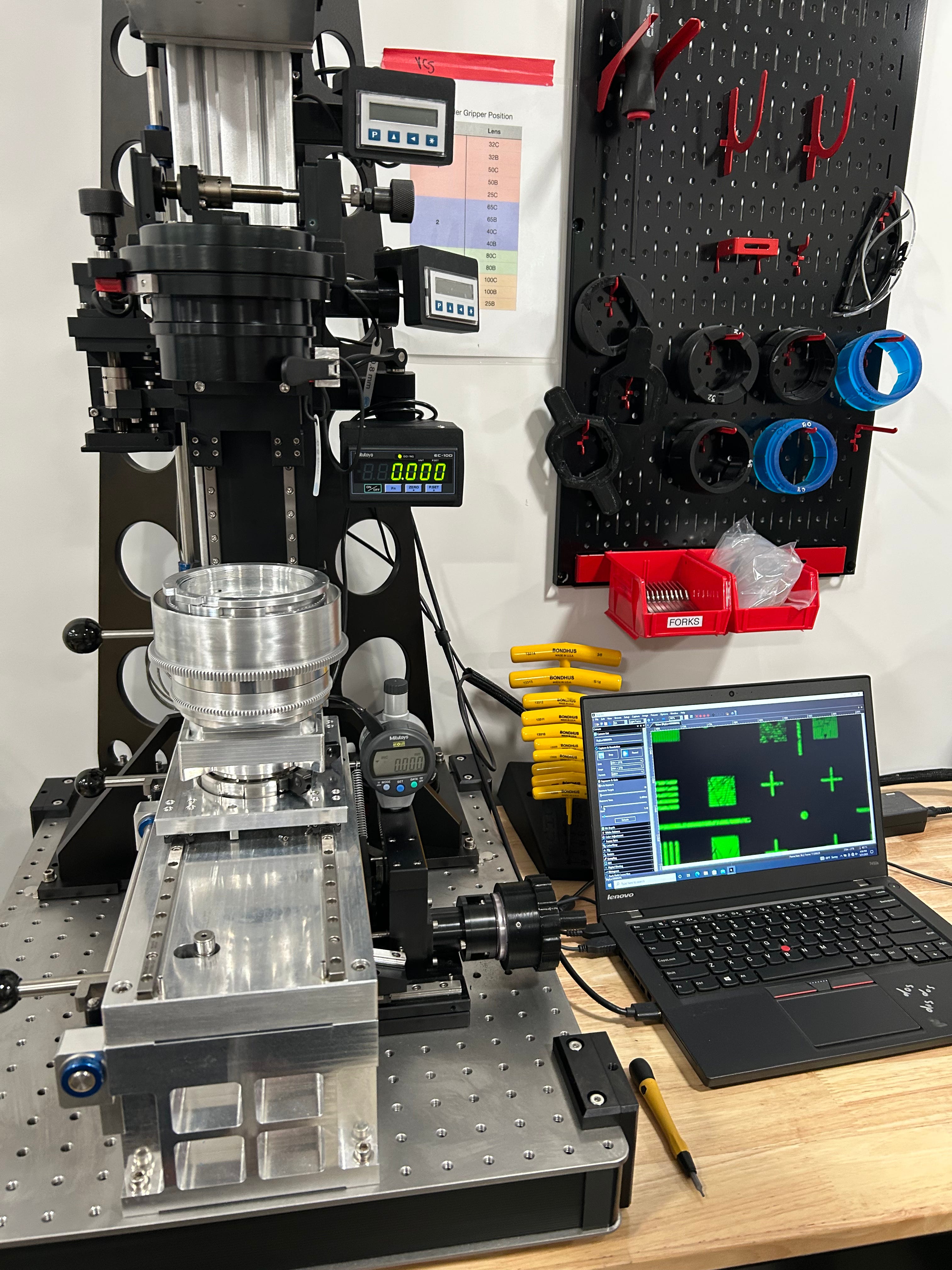
So I was looking on eBay, but I was just finding adapters or old tech that didn’t quite work because you had to focus two systems at once. And I thought, “Well, what if I just tried to develop it for myself?” I got some old anamorphic projection equipment, and I started building lenses with those components, and then I started developing focusing techniques, and systems that worked with those elements. I was just trying to teach myself, really learn what was going on under the hood.
And at some point it dawned on me that there might be an audience of people who would want to buy this. I slowly started putting my tests out on video. I’d share them on online forums, and eventually that caught the attention of my co-founder today, [cinematographer] Dan Kanes. He saw what I was doing, thought it was cool, and offered to help make it into a product. He had this same passion for the images and what it could mean to be accessible to people like us. And so we started Atlas Lens Co. together in early 2016.
Explain this for someone who may be unfamiliar with the term – what’s so special about anamorphic lenses?
Anamorphic is a type of lens, and it’s also really a viewing experience. Most lenses are built out of spherical glass, because if they’re rotated on their radius of axis, they’re a sphere shape – like how your eyeballs work. An anamorphic lens does not see the world like that – the component of the lens has what’s called cylindrical glass inside that’s squeezing the image horizontally more than it is vertically. And you have to do something about that, because the image is going to look skinny. And when you de-squeeze the image, what you’re left with is now a wider frame, because you’ve taken your original sensor ratio and you’ve doubled it horizontally so that everything is displayed proportionately again.
Anamorphic lenses are known for their wider aspect ratios, shallower depth of field, and their distinctive lens flares and oval-shaped bokeh (the aesthetic quality of the out of focus blur.)
But also what’s cool about it is the optical effects that are created through that lens: things like the out of focus areas, a lot more bowing and barrel distortion, all these little things that are cues that the image is unlike the real world. And a lot of that quality is part of that immersiveness, it’s almost like a signature that a lot of big feature films have. You get these interesting types of distortions, out of focus regions, the areas that are in focus, and things don’t come quite into focus, either, things called astigmatism. I feel like it’s almost like putting on goggles and seeing something that you can’t see with your own eyes. I feel like it contributes to the movie-going experience a lot. It’s an aspirational cinematic look.

You’ve had a lot of success with your company. Do you want to talk about any of the filmmakers and the projects that you’ve helped create lenses for over the years?
I’ve always retained a certain level of self-doubt. I like what I do; I think what we’re doing is great. But even as we were building [the company], as we were selling product, I almost just assumed that we would always be judged as, “Oh yeah, that’s the everyman’s anamorphic, that’s not a top tier selection.” A lot of these lens brands have decades-long history that we don’t have. In the early days of the company I was really inspired by the DP Linus Sandgren’s work on La La Land. He used the Panavision C-Series anamorphic lenses, and as I was working on the Orion series, our own lenses, I was just hoping that one day, maybe somebody would use them in a capacity like this.
And then, before he shot the movie Don’t Look Up, Linus reached out to my cofounder to test the Orions. And he used them for the whole extent of the movie. I thought that was so cool – a hero [of mine] reaching out to use my work. But after that, he starts working on another movie that they were prepping for, Babylon. And for that film, he wanted a custom set of Orions. At the time, they were testing old vintage optics and things, I guess the director [Damien Chazelle] was fixated on that. But mechanically, [these old lenses] don’t work very well, and it would be a nightmare to make sure they’re tuned up and accurate and trustworthy enough to land the shots they needed. So Linus got directly in contact with me and we built his lenses. I aged the glass by using an optical polish, but a sort of heavier grit of it, changing the figure on the coatings of certain surfaces. And that gave a little bit more diffusion, and it gave the effect that this lens was older than it was. So here’s this pinnacle, this life goal that I’m aiming at. And then here he is asking me to help him make it happen.

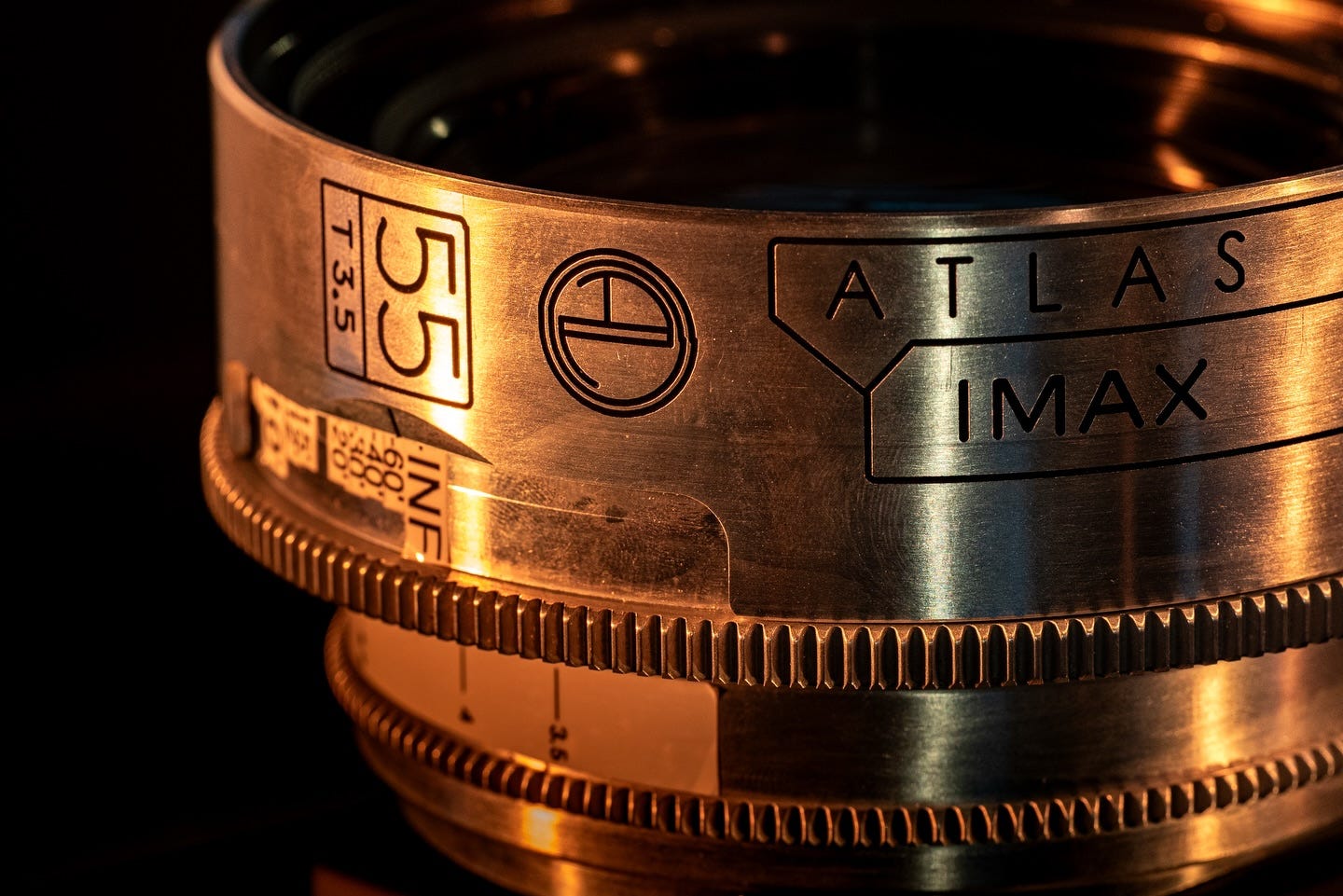
And not thinking that could get topped, Linus comes back and asks us to make new custom lenses for IMAX for Dune: Part Three. It was very hush hush at first, because the prior Dune movies weren’t shot on film, they were shot on digital. But Linus is a big film guy, and he wanted to bring in different formats of film. There’s 35mm, which is what our Orion’s cover. There’s large format film VistaVision, which is what our Mercury lenses cover. But he wants to go all the way to IMAX, the biggest film format there is. So there was a whole process of talking to IMAX, because I was asking for a lot. I needed to know the mechanicals, the interface for the camera, I needed to know what kind of optics can work in it, which is proprietary. It’s their secret sauce. So we started developing these lenses, and this whole time I was just trying to make sure that I stayed true to what Linus wanted to see. He would show some tests of other lenses we had with different coatings to Denis Villeneuve and they would discuss the color of the coatings. They agreed that they liked this warm sort of orange coating that would look pretty cool. (Obviously, it’s Dune.)
And so we had to develop new glass. We also had to develop all the mechanical housings, which I’d never done before. There were deadlines sometimes when they had to do these test shoots, I’d finally tell the engineers to go home at 11:30 PM and I’d stay the night to get it ready. It felt like this next pinnacle and I didn’t want to let Linus down because he’d really believed in us, even when it felt like we were failing.
Ok, but let’s not skip the best part. You went out to the Middle East to test these lenses!
So there’s the tests that happened here in LA, and then I sent my right hand man Matt on location in Budapest, which is where they shot the film. The second time I got to go, to deliver another set of 4 lenses. (Because there were two camera systems, we actually made lenses for both IMAX and the System 65 camera, which is also large format, bigger than full frame.) It was a very fun environment because Denis is so positive. He’s one of those people who likes to get the shot and move on. It was a fun dynamic, though I mostly just stayed out of the way!
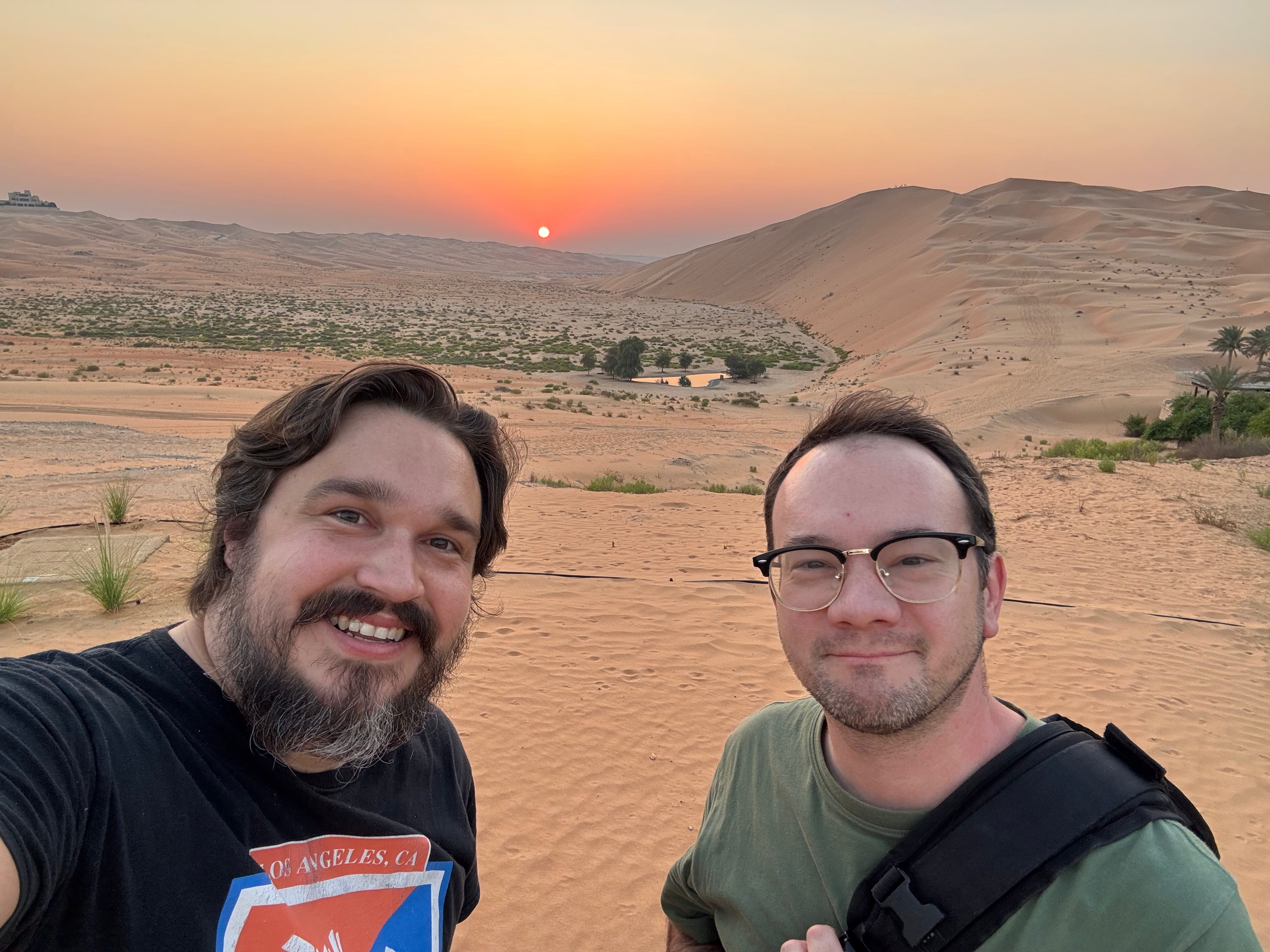
Our last trip was to the UAE. That was mostly like a repair trip, we went out to service the lenses. We stayed three days in this wildlife reserve in Abu Dhabi that they shot at, and there was this huge tent city thing that they’d built up.
What are some challenges of running a lens company that someone not in the world wouldn’t be aware of?
There’s the business side of it, which I think is very common. Sales and all that, all the typical worries there. But I think for us as a lens company, it’s about the mixture of film culture, the dynamic of people who’ve worked on set, and mixing that with an office job structure is kind of... a very interesting dynamic. People who have worked in film have expectations of how fast something gets done. Because in the film world, you just find a way to get it done right away as quickly as possible. You don’t care if you have to stick it up with bubble gum because you ran out of gaff tape – as long as you got the shot, you move on. But the business world doesn’t work like that, or rather, that doesn’t work with solutions inside of an office, because then you’ve created a mess for the next person who comes in after you.
In addition to your day job, you also have a passion for church history – do you want to bring up what are you working on in terms of the alleged Joseph Smith daguerrotype?
I mean, I’ve always had a passion for church history. I grew up as a member of the LDS church; I’m still an LDS member, but less active, or not active. But my level of interest in the history of the church has never really changed. I just have a respect for that era, there’s a mystique around the early days of the forming of the early church, especially with Joseph Smith and the bringing forth of The Book of Mormon. And there’s certain topics there that I find fascinating that I want to continue to explore and always have wanted sort of more answers, but the people that [could] give them aren’t alive anymore. One of those things is the portrayals of Joseph Smith; I often find they don’t really match up to my expectations of how he probably looked in life. And artists have only really been able to go off of some historic drawings. But both he and his brother Hyrum had death masks made, and the more I studied the death masks, the more I realized, “I don’t think either of these look exactly like they did in life or through art.”
So I bought copies of the death masks of Joseph and Hyrum that were cast from secondary molds taken from the originals back in 2014. At the time, the task was too daunting for me, and I didn’t think the technology was there. But maybe because now there’s a daguerreotype that may or may not be Joseph, it sparked my interest again: what does he actually look like? Could that be him? And now as the Church has released digital copies of the death masks that were taken of Joseph and Hyrum, so you can download accurate digital scans. And I brought those into Blender and used the sculpting side of the software to recreate their facial structures that would have existed behind the mask.

And what I’m finding is just fascinating because I feel like I’m bringing something out that is a slightly new look on the same thing. A lot of people have taken this death mask and tried to figure out how he would appear in real life, and I’m trying to carefully do the same. I was trying to compare to the daguerreotype, which I do find interesting. but I still find problems with it that are not satisfactory. I don’t have a conclusive answer, it just brings out more questions. But I think just as much as Joseph is fascinating in this religious sense, he’s like a historical enigma as well. And I want to figure that out.

Wow this was so informative and fun! Inventors are the best!